Dorsia
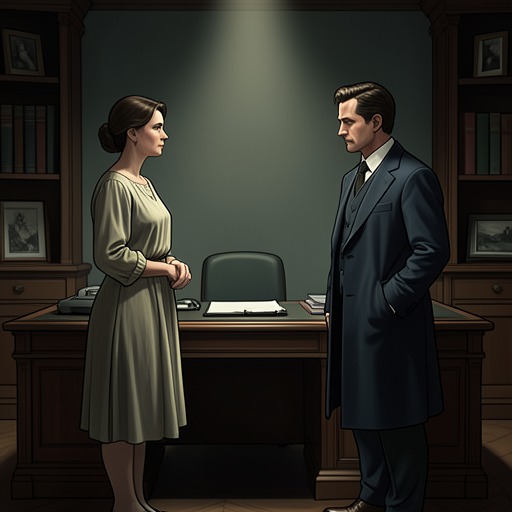
American PsychoDorsia is an elite Manhattan restaurant that functions less as a setting for food than as a gatekeeping institution within the social world of Patrick Bateman. Its scarce tables, harried staff, and tightly controlled access make a reservation a public measure of rank. For Bateman, the restaurant becomes an object of fixation: securing entry promises composure and distinction, while rejection produces humiliation, rage, and a sense that his carefully managed identity is collapsing.
Definition and Social Function
Dorsia belongs to the network of fashionable restaurants through which Bateman and his associates display wealth and professional standing. The restaurant's value lies in its exclusivity. A table is not simply a place to eat; it is proof that a person has successfully entered a coveted social circuit. The maître d's authority is therefore unusually consequential. A telephone exchange can elevate Bateman's mood or reduce him to pleading, waiting, and physical panic.
The restaurant also belongs to a larger urban geography of status. Bateman moves among Wall Street offices, expensive restaurants, clubs, taxis, and streets where homeless people ask for food or change. Dorsia represents the sealed, prestigious end of that system, while the streets outside expose the poverty and disorder that the restaurant's rituals temporarily conceal. The contrast makes the restaurant a stage on which social hierarchy is rehearsed and protected.
Bateman's Obsession with Access
When Patricia agrees to meet at eight, Bateman immediately grabs the Zagat guide and searches for Dorsia. He repeatedly redials the restaurant for five minutes through a busy signal before finally reaching an androgynous voice that places him on hold. He remains on the line for another five minutes, his palm sweaty and his grip tight on the cordless phone, divided between recognizing the futility of the attempt and hoping for an answer. The reservation is treated as an adrenaline-producing ordeal rather than an ordinary arrangement.
The same fixation returns when Bateman tries to arrange a table for Jean. He presents the call as a demonstration of ease, checking his Rolex and winking at her, but the restaurant refuses him: it is fully booked, and even the waiting list is full. After the call ends, he struggles for breath with every muscle tense, while Jean stands confused and notices that he has not supplied a name. His outward performance of control thus ends in a small but revealing failure. Dorsia has exposed the difference between the effortless access Bateman wants to project and the dependence he cannot conceal.
Dining, Rivalry, and Concealed Violence
Dorsia is also associated with Bateman's competitive relationships. Sean Bateman calls at five and says that he has spoken to Brin, the owner, and reserved a table for nine. Bateman arrives later, expecting to meet his brother, and is forced to wait because the maître d' will not seat him until Sean appears. The empty booth across from the bar becomes an image of suspended privilege: it is available, but only for the person whose name and presence authorize it.
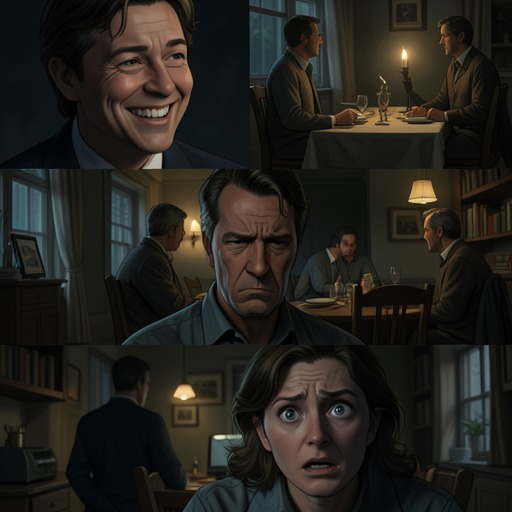
While waiting, Bateman takes Xanax and drinks Absolut on the rocks. In the men's room he imagines disappearing into a crack above the urinal and concludes that nobody would care if he vanished. When Sean finally arrives, he is already chain-smoking, has ordered Cristal, and assumes Bateman will pay. The restaurant therefore converts brotherly contact into another contest over entitlement, expense, and recognition. Even a reserved table cannot produce intimacy; it merely gives rivalry a polished setting.
Dorsia's association with violence is more disturbing because it remains embedded in ordinary social ritual. Bateman considers whether Luis Carruthers's death would allow him more time with Courtney Lawrence and whether strangling Luis would improve his own situation. The thought occurs amid questions about attraction, clothing, sex, and social advantage, then leads him into the men's room, where he puts on leather gloves and approaches Luis in a stall. Dorsia's dining-room civility and its private spaces consequently coexist with murderous fantasy, showing how the restaurant's surface order fails to contain Bateman's impulses.
The Restaurant as a Failed Performance
The restaurant's power depends on appearances, and Bateman is unusually dependent on appearances himself. At social gatherings he uses clothing, manners, expensive accessories, business cards, reservations, and practiced gestures to maintain a convincing public persona. The Dorsia scenes repeat this pattern in concentrated form. He sounds casual while making the call, offers Jean a wink, and tries to express pleasure after the rejection, yet his body registers fear and strain more honestly than his words do.
The same instability extends beyond the restaurant. Bateman's world repeatedly confuses people with one another: at a party he encounters figures who look like familiar men, while his own identity is later subject to similar uncertainty. A private investigator tells him he has been hired by Meredith Powell to investigate the disappearance of Paul Owen, but the investigation does not produce a stable public reckoning. Bateman can later leave Harold Carnes a message confessing to dozens or even a hundred murders while police activity unfolds across the street, yet the confession remains suspended in the same world of failed recognition and uncertain consequence. Dorsia's refusal to confirm Bateman's status is one local version of this larger collapse of verification.
Narrative Significance
Dorsia gives the novel a recurring material symbol for exclusivity, anxiety, and social homogeneity. Its telephone line, waiting list, empty booth, and maître d' turn desire into a sequence of delays and denials. The restaurant is never merely background: it measures who may enter, who must wait, who pays, and whose name carries authority. Outside, Bateman encounters taxis, graffiti, abandoned streets, homeless people, and the visible decay of New York City; inside, he pursues an immaculate social order whose rules are equally violent in less obvious form.
Because Dorsia repeatedly promises recognition but delivers frustration, it helps define Bateman's unreliable experience of the city. He seeks the restaurant as though access could stabilize his position, yet every encounter instead intensifies his alienation. The desired table, like the perfect business card or the correct designer outfit, offers only a temporary surface. Dorsia's decisive significance is therefore ironic: it is the emblem of a society that treats belonging as a scarce commodity, while its most privileged customer remains unable to secure either genuine connection or a reliable identity.